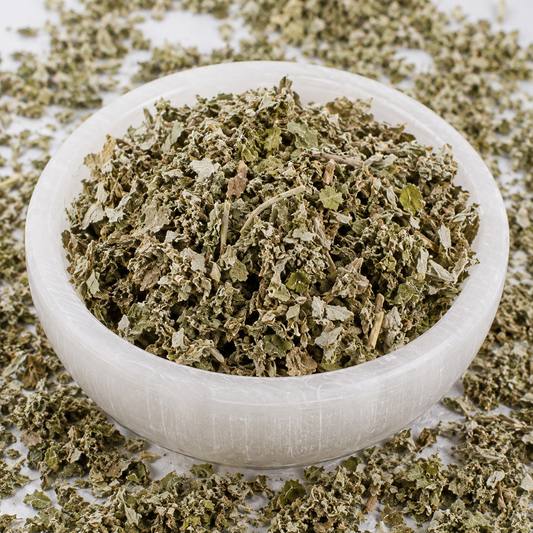
Other Names: Belladonna • Devil’s Cherries • Witch’s Berry • Dwale • Sorcerer’s Nightshade
✨ Energetic & Astrological Profile
Element: Water
Phase of the Moon: Dark Moon
Zodiac Signs: Scorpio, Pisces, Capricorn. A mysterious initiator for Taurus and Libra.
Planets: Saturn, Pluto
Tarot Cards:
🌒 Death – transformation, endings, initiation
🌿 The Moon – illusion, hidden truths
🖤 The High Priestess – sacred mystery, threshold wisdom
🔥 The Tower – radical unravelling, awakening
🌍 Habitat & Sensory Nature
Deadly nightshade is native to Europe, North Africa, and Western Asia, often found in woodlands, shaded thickets, and wastelands. With her violet trumpet flowers and jet-black berries, she hides in plain sight, seductive and dangerous.
Flavour: Bitter, acrid, numbing
Temperature: Cold
Humidity: Dry
Tissue State Support: Overstimulation, pain, inflammation (but must be professionally prepared)
🧬 Phytochemistry & Herbal Actions
Constituents:
- Tropane alkaloids: atropine, hyoscyamine, scopolamine
- Coumarins
- Flavonoids
- Belladonnine
Primary Actions (when used in extremely small, controlled doses):
Anticholinergic • Antispasmodic • Sedative • Analgesic • Mydriatic • Antisecretory
💊 Medicinal Benefits
Deadly nightshade walks the line between poison and potent medicine. Once used in tinctures and salves under the strict eye of physicians and herbalists, her power is precise and formidable.
🌿 Pain & Spasm Relief
- Historically used to relieve muscle spasms, especially in the gut and uterus
- Applied topically in analgesic salves for nerve pain and arthritis
- Used in ophthalmology (dilating pupils with atropine)
🌿 Respiratory Conditions
- Belladonna alkaloids help reduce bronchial secretions and open airways in severe asthma (rarely used today due to safety concerns)
🌿 Nervous System Disorders
- In the past, used for Parkinsonian tremors, nerve pain, and insomnia due to nervous irritation — always under strict control.
IMPORTANT: Modern herbalism does not support internal self-use of deadly nightshade. All medicinal applications require expert preparation and dosing — this plant is highly toxic.
🧘 Emotional & Energetic Benefits
Deadly nightshade is a plant of thresholds — of descent, shadow work, and spiritual transformation.
She invites you to:
- Let go of what no longer serves
- Walk through fear with reverence
- Acknowledge your own power without letting it consume you
She is not a daily tea herb — she is a ritual guardian, a gatekeeper plant that helps us face the void, then return wiser.
🧒 Child-Friendly Use
⚠️ not suitable for children in any form. Highly toxic.
⚠️ Contraindications
⚠ Contains toxic alkaloids — ingestion of even small amounts can be fatal
⚠ Not to be used without professional clinical supervision
⚠ Avoid during pregnancy, breastfeeding, or any self-treatment
🧪 Dosage & Preparation
🌼 External use only unless prescribed by a professional
🌼 Homeopathic doses are available over-the-counter but are highly diluted
🌼 Traditional salves or liniments made with belladonna leaves were used to relieve joint pain — never on broken skin
Due to its toxicity, deadly nightshade is not available in our shop in any form.
🔮 Daz’s Diagnosis
Deadly nightshade is not your average herb. She’s not here to comfort — she’s here to initiate. To pierce the illusion and hand you a mirror.
She reminds me of a strict but loving crone — sharp-eyed, protective, but unforgiving if disrespected. She whispers, “Enter if you dare. Exit changed.”
For most, her wisdom is best admired from a distance. But for those walking the path of transformation, shadow work, and spiritual depth, she is a potent ally in ritual and reverence.
Disclaimer: The information shared in these plant profiles is intended for educational and inspirational purposes only. The uses and properties described are based on traditional knowledge, folk practices, and historical sources. They are not a substitute for professional medical advice, diagnosis, or treatment. Always consult with a qualified healthcare practitioner or clinical herbalist before using any herbs, especially if you are pregnant, breastfeeding, on medication, or managing a health condition.