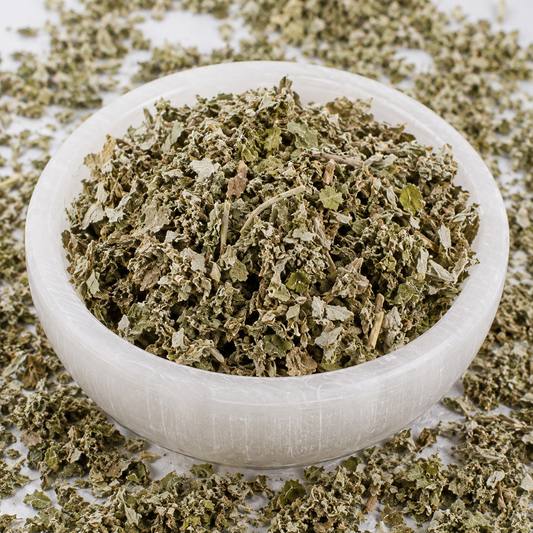
Other Names: Qing Hao • Annual Wormwood • Sweet Annie • Chinese Wormwood
✨ Energetic & Astrological Profile
Element: Air
Phase of the Moon: Waning Moon
Zodiac Signs: Virgo, Aquarius, Libra. A clarifying ally for Pisces and Cancer.
Planets: Mercury, Uranus
Tarot Cards:
🌿 The Magician – focused healing and transformation
🌬 Ace of Swords – mental clarity, precision
🌙 The Star – guidance, purification
🔥 Temperance – herbal alchemy, balance
🌍 Habitat & Sensory Nature
Native to Asia (especially China), sweet wormwood now grows in many warm temperate and subtropical regions around the world. It thrives in disturbed soils, meadows, and wild edges — tall, bright, and unmistakably fragrant.
Flavour: Mildly bitter, aromatic, cooling
Temperature: Cool
Humidity: Dry
Tissue State Support: Heat, toxicity, stagnation
🧬 Phytochemistry & Herbal Actions
Constituents:
- Artemisinin (potent antimalarial compound)
- Flavonoids
- Volatile oils (camphor, 1,8-cineole)
- Coumarins
Primary Actions:
Antimalarial • Antiviral • Antibacterial • Antioxidant • Antipyretic • Anti-inflammatory • Digestive stimulant • Bitter tonic
💊 Medicinal Benefits
Sweet wormwood is famous for producing artemisinin, the active compound in many antimalarial drugs — a game-changer in global health.
🌿 Fever & Infection Support
- Traditionally used to treat malaria and fevers (especially in Chinese medicine as “Qing Hao”)
- May support recovery from viral infections, including emerging research around certain strains of influenza and even COVID-19
- Cooling and purifying, it can be a helpful ally in high-heat conditions like summer colds or inflammatory infections
🌿 Liver & Detox Support
- Stimulates bile flow and helps the liver break down toxins
- Used in traditional formulas for clearing “heat and damp” from the liver, blood, and digestive system
🌿 Gut Health
- Mild bitter that can support sluggish digestion
- Often included in herbal cleanses, especially when paired with black walnut and clove
Sweet wormwood is that refreshing breeze through a fevered body, a purifier that’s gentle enough for the weary but strong enough to battle the heat.
🧘 Emotional & Energetic Benefits
This is a clarity herb — ideal when your mind feels foggy or your body overheated.
Emotionally, sweet wormwood supports those who are:
- Mentally overworked
- Experiencing hot anger, frustration, or burnout
- Feeling weighed down by “internal toxicity” — negative thoughts, resentment, or energetic buildup
It cools, clears, and uplifts. Like a deep sigh on a hot day or the calm after a summer thunderstorm.
🧒 Child-Friendly Use
⚠️ Not recommended for long-term use or high doses in children without guidance.
In traditional Chinese medicine, it may be used in small doses for fevers under professional supervision.
⚠️ Contraindications
⚠ Avoid in pregnancy and breastfeeding
⚠ May interact with liver-metabolised medications
⚠ Not for long-term internal use without supervision — can affect liver enzymes
🧪 Dosage & Preparation
🌼 Tea: ½–1 tsp dried herb per cup, steep 5–10 min, up to 2x daily for short-term use
🌼 Tincture: 5–20 drops of 1:5 extract in 25% alcohol, up to 2x daily
🌼 Traditional decoction (Qing Hao): Simmer gently in water to extract heat-clearing compounds
🛒 Shop This Herb: Coming soon — handcrafted sweet wormwood teas and formulas to cool the body, calm inflammation, and support recovery. Stay tuned via our newsletter 🌿
🔮 Daz’s Diagnosis
There’s something ancient and unshakably wise about sweet wormwood. She doesn’t shout — she cools, clears, and restores without fanfare.
This is the herb you call on when your body’s running hot, your energy’s clogged, or you just need something sharp and effective.
She’s the cool-headed healer in a world full of chaos — and in my opinion, an underrated powerhouse in modern herbalism.
Disclaimer: The information shared in these plant profiles is intended for educational and inspirational purposes only. The uses and properties described are based on traditional knowledge, folk practices, and historical sources. They are not a substitute for professional medical advice, diagnosis, or treatment. Always consult with a qualified healthcare practitioner or clinical herbalist before using any herbs, especially if you are pregnant, breastfeeding, on medication, or managing a health condition.